a redesign of dodo payments’ onboarding and payout experience to help developers activate faster, while keeping trust and compliance invisible but strong.
the context
dodo payments is a global payments & billing infrastructure built for early-stage teams. but unlike most payment products, dodo payments acts as the merchant of record — dodo payments is legally responsible for what our users sell and how money moves across borders.
that means onboarding isn’t just about usability. it’s about trust, risk, and survival.
the original flow treated compliance as a wall. users had to complete heavy verification before they could experience the product. most never made it through.
team
myself
product manager
founders
compliance lead
timeline
2 months
a quick note
this is a condensed version of the project. i’ve shared the core thinking and outcomes, without diving into details. if you’d like to see a deeper walkthrough of the process, tradeoffs, and iterations, please get in touch.
the problem
dodo payments' original onboarding flow was built around safety first.
merchants were required to complete multiple verification forms before they could access live payments or payouts. while this protected the platform, it created two major problems:
1
verification was forced too early, creating friction before users experienced real value.
2
payouts and verification lived as separate mental models, even though they were deeply related.
merchants came to dodo payments to start selling quickly. instead, they were slowed down before they ever touched real money.
the system was safe. the experience wasn’t.
the approach
instead of using verification as a gate, we redesigned it as a progressive trust system.
the goal wasn’t to remove risk.
it was to place trust at the right moment.
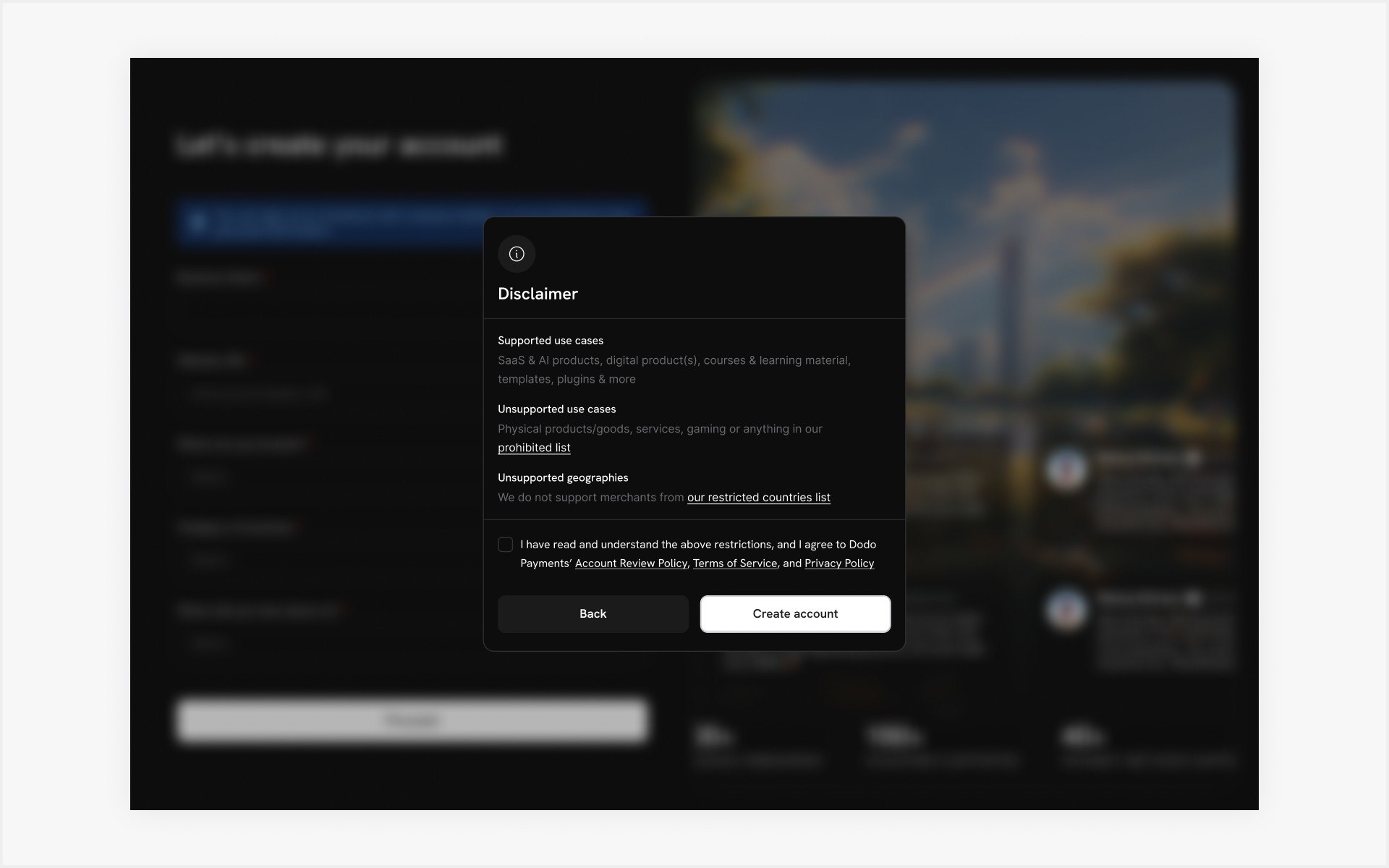
unsupported business categories are filtered at signup.
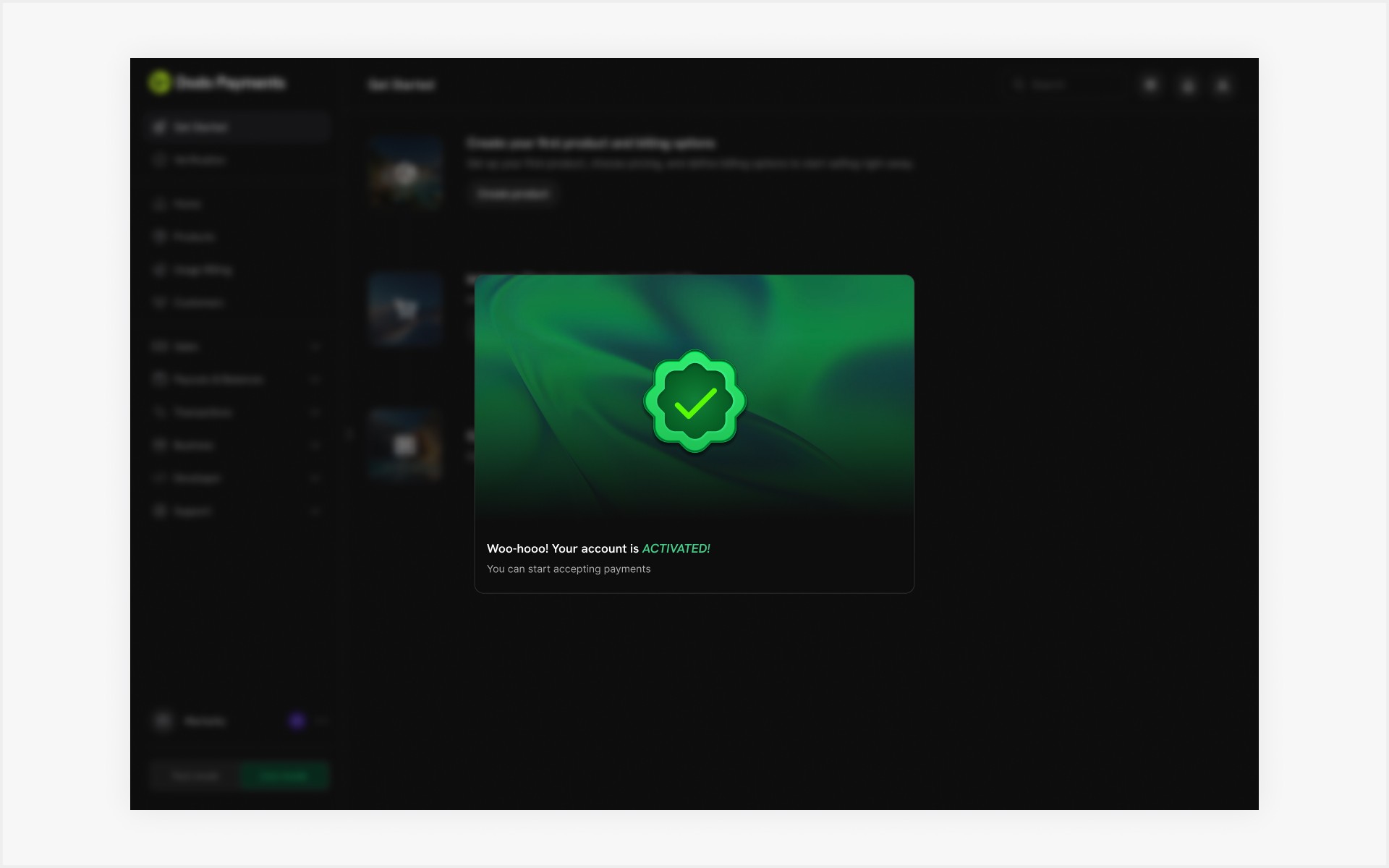
legitimate users get instant live access.
trust is built through real usage.
and only when money needs to leave the system do we collect the details required to release it.
key improvements in the experience
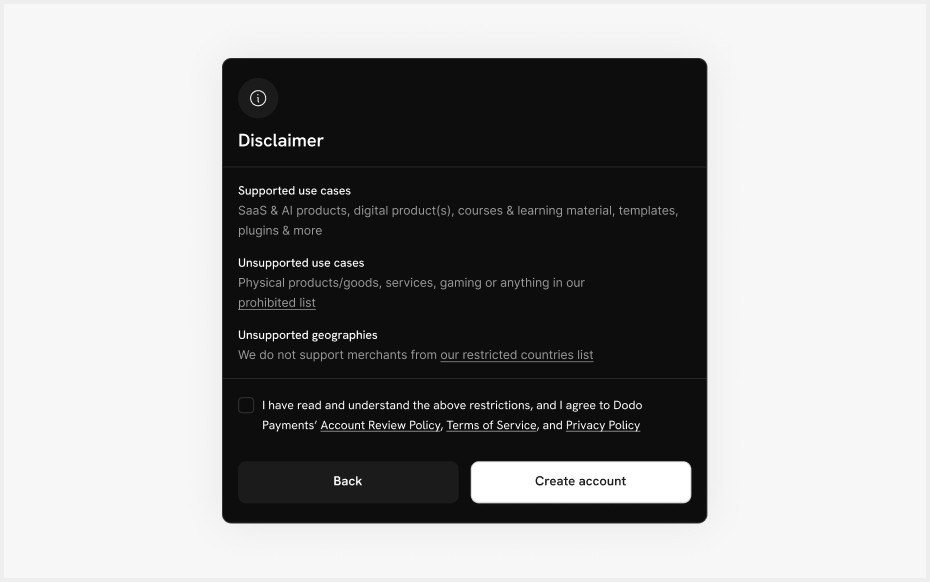
unsupported business categories are filtered upfront with clear explanations
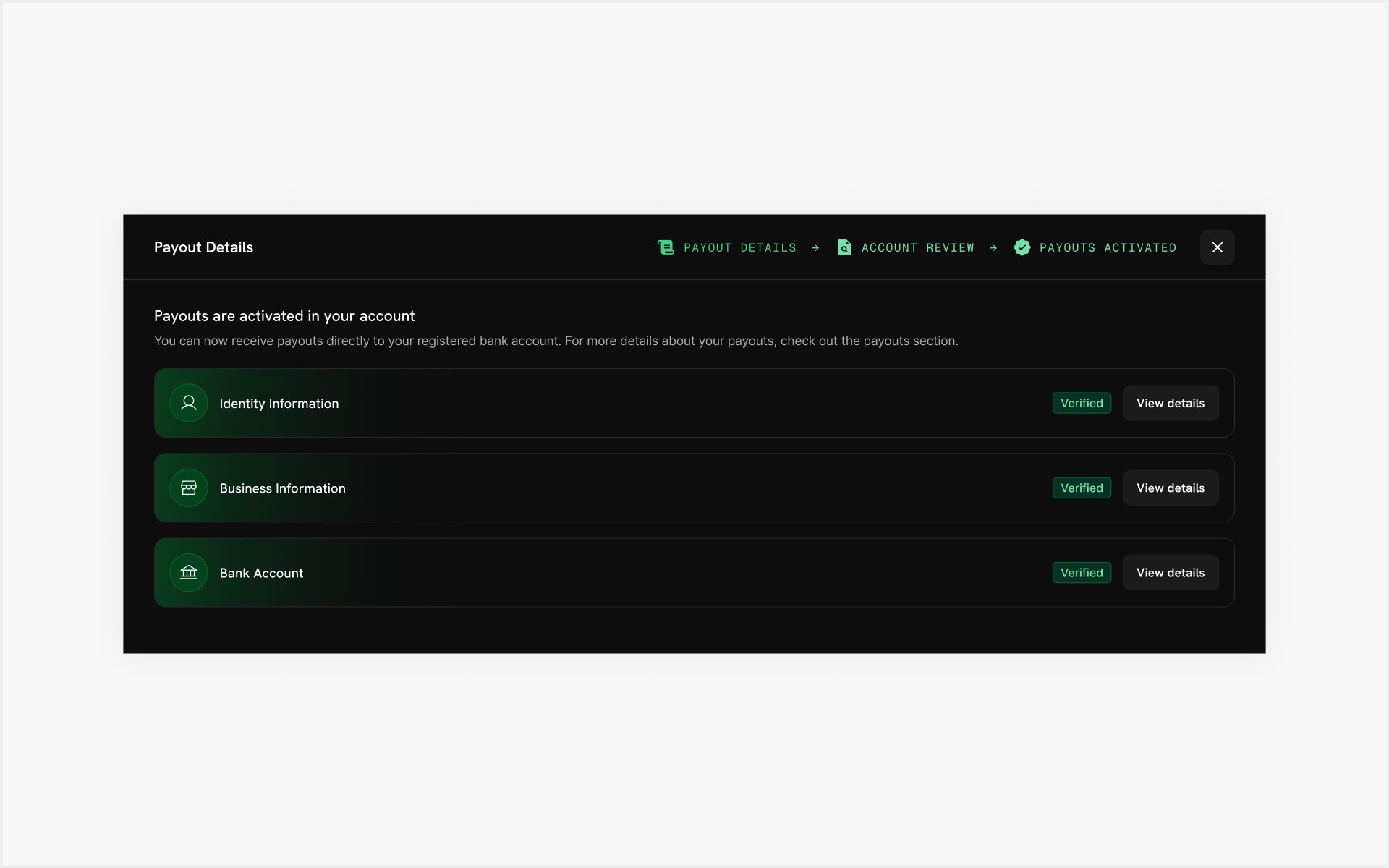
eliminated standalone verification by collecting details only when required for payouts
all forms are merged into a single, focused flow
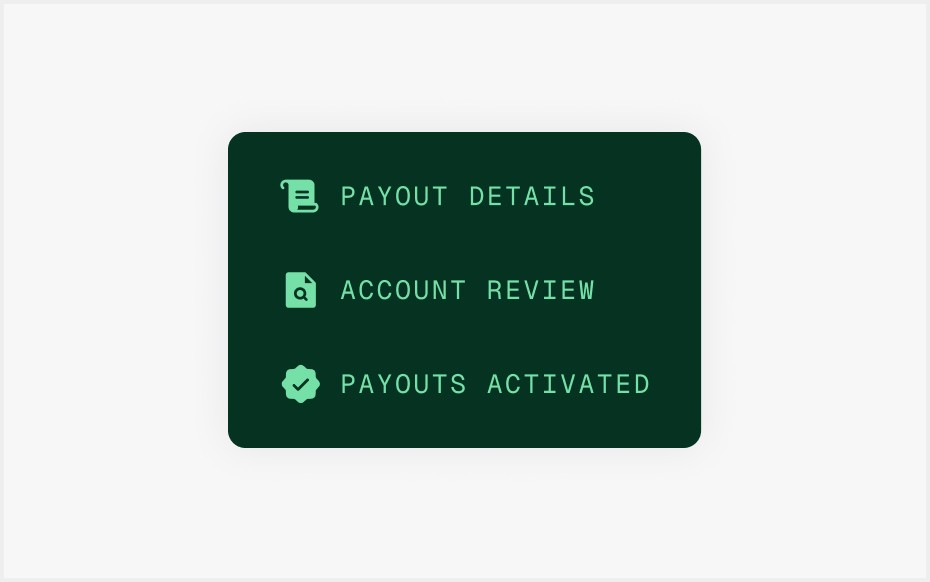
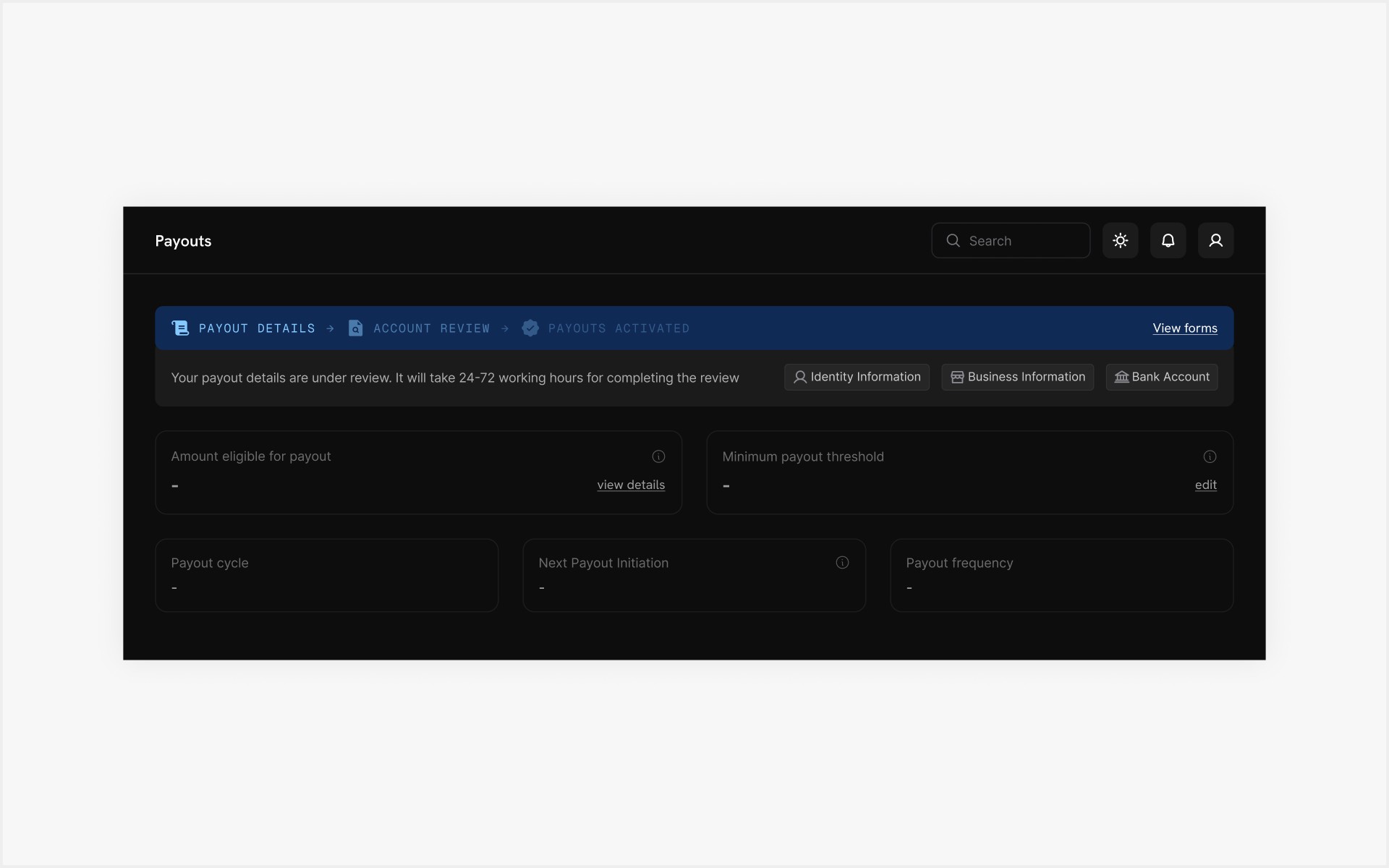
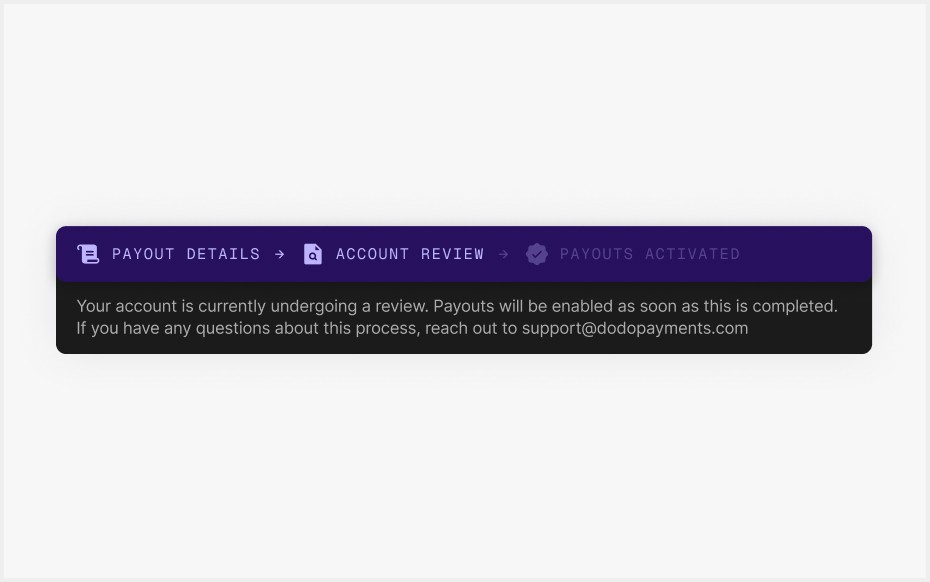
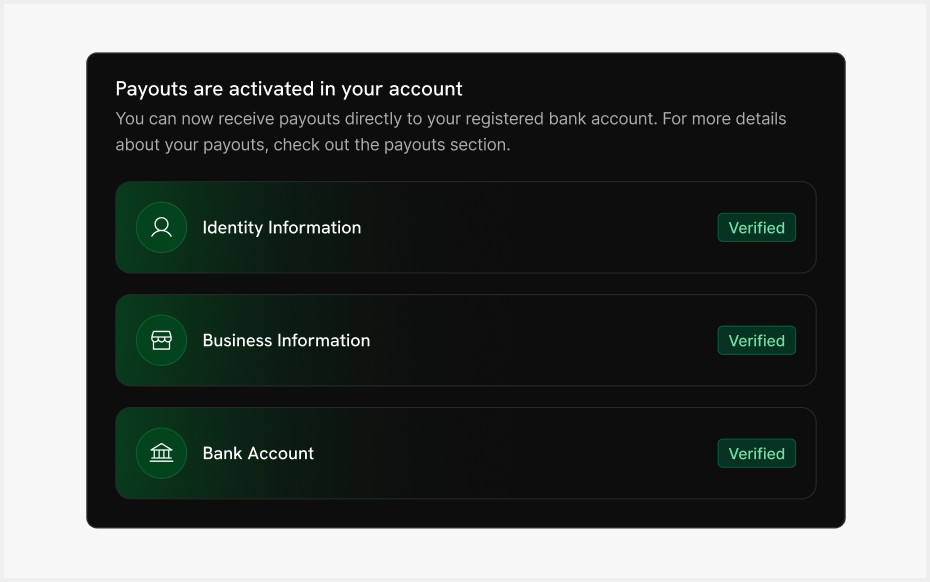
payout status is always visible and easy to understand
why this mattered
because dodo payments is the merchant of record, every onboarding decision affects:
– legal exposure
– fraud risk
– the ability to operate globally
this wasn’t just a UX cleanup.
it was a structural shift in how trust is designed.
the outcome
onboarding feels lighter. developers can sign up, create a product, and run real transactions without getting blocked by forms. they understand the value of dodo within minutes, not days.
payouts are activated faster because trust is built after real usage, not before. support sees fewer “why can’t i go live?” questions. merchants reach the payout stage with cleaner, more accurate information.